How modern sales enablement platforms unify content, coaching, and AI workflows




TL;DR
- Most sales enablement platforms are just digital libraries. They give reps access to content and coaching but don't ensure they use it correctly—or at all.
- The best platforms are shifting from passive asset management to active execution. They embed content, coaching, and AI directly into a rep's live workflow, guiding their actions at the moment of need.
- Enablement is no longer about storing knowledge, it’s about orchestrating execution to close deals.
A sales enablement platform is a system designed to help sales teams execute deals more effectively. But this definition is incomplete. It's what you find on page one of a search query, and it's fundamentally wrong because it mistakes access for action.
Most definitions stop at listing the core components: content, training, and analytics. This approach is outdated.
The “centralized platform” definition most articles stop at
You have seen the standard descriptions. They frame these platforms as a central hub for assets, a digital library for sales collateral, training modules, and best practices. This framing is convenient for categorizing software, but it does nothing to drive outcomes. It implies that if reps just had everything in one place, they would execute perfectly. We both know that isn't true.
Why modern platforms must be defined by execution, not features
A platform’s value isn't in what it holds, but in what it makes happen. Modern platforms must be defined by their ability to drive execution. The critical question isn't "Where can my reps find the content?" It's "Does this tool ensure my reps use the right content, with the right person, at the right time to move a deal forward?" Execution is the missing dimension in almost every definition, and it’s the only one that matters.
Why sales enablement platforms expanded beyond content and training
The old model of enablement—a simple content repository and a learning management system—broke. It had to. It was a reactive necessity, not a burst of innovation. The selling environment became too complex. Deals now involve distributed buying groups, reps are selling remotely, and everyone is overloaded with information and alerts.
Enablement platforms had to expand their feature sets just to keep up. They bolted on coaching tools, analytics dashboards, and automation features in an attempt to address the growing friction in the sales process.
The operational pressure that broke the old enablement model
The real pressure point was this: reps had access to everything and were still stalling. They had the battlecards, the case studies, and the training videos. Yet, deals still slowed down at predictable stages. Access to a resource does not equal effective action. A library is useless without a librarian who tells you which book to read next, and why. The old model provided the library but left the rep to figure out the rest.
The core sales enablement capabilities buyers expect
When you evaluate these platforms, you will encounter a standard checklist of capabilities. These are the table stakes required to even be in the conversation.
- Content management and distribution: Housing and delivering assets.
- Training and coaching: On-demand learning and skill development.
- Analytics and insights: Dashboards showing what’s being used and what isn’t.
- CRM integration and automation: Connecting to the system of record.
- AI-driven recommendations: Suggesting content or training modules.
Acknowledging these pillars is necessary for a complete discussion. But treating them as differentiators is a critical mistake. They are the baseline, not the benchmark.
Why feature lists dominate rankings — and buyer confusion
Search engines reward comprehensive lists. Articles that enumerate every possible feature tend to rank higher, which leads buyers to believe that a longer feature list equals a better product. This creates a cycle of confusion. Teams buy the platform with the most checkmarks, only to find that adoption is low and the promised impact on revenue never materializes. The tool is powerful, but it's not integrated into the rep’s actual workflow.
The major categories of sales enablement platforms
To make sense of the market, analysts group platforms into categories. This can be useful for understanding a vendor's origins, but it's poor guidance for making a purchase. The common groupings you'll see are:
- Content-centric platforms: Evolved from content management systems.
- Coaching and readiness platforms: Focused on training and rep development.
- Engagement and workflow tools: Centered on automating sales sequences and communication.
- Intelligence and analytics layers: Designed to surface insights from sales data.
- “All-in-one” enablement suites: Attempt to bundle all of the above.
Don't get distracted by these labels. They describe a platform’s past, not its future value to your team. (These categories explain how tools evolved, not how they perform in live deals.)
Why category labels matter less than workflow ownership
These categories are just architectural tendencies. A platform that started in content will have different strengths than one that started in coaching. What matters more is how the platform integrates into and owns a specific part of the rep's workflow. Does it just sync data with the CRM, or does it actively guide the next step within the CRM? The label is irrelevant. The level of workflow orchestration is everything.
Where the traditional sales enablement narrative breaks down
The entire premise of traditional enablement is flawed. It’s built on a series of assumptions that don’t hold up under the pressure of a real sales cycle.
- Centralization does not equal adoption: Just because content is easy to find doesn't mean reps will use it, or use it correctly.
- Training does not equal behavior change: Completing a module doesn't mean a rep has internalized the skill and can apply it under pressure.
- Insights do not equal action: A dashboard showing a deal is stalled doesn't tell a rep what to do next to get it moving.
This is why most ROI claims for enablement are overstated. They measure content views and training completion, not changes in rep behavior that directly influence revenue.
The adoption gap no vendor comparison addresses
Vendor comparison sheets and analyst reports can't tell you about the lived reality of using a tool. They don't account for workflow friction, the need for change management, or the trust a rep has—or doesn't have—in the recommendations a platform provides. The "best tool" on paper often becomes shelfware because it disrupts a rep's flow instead of simplifying it.
What unification actually means inside modern sales enablement platforms
Unification isn't about bundling features into one user interface. It’s about the coordination of decisions. A modern platform doesn't just provide assets; it orchestrates action. It unifies the answers to three critical questions for the rep in real time:
- What should I do right now?
- When is the right moment to do it?
- Why does this action matter to this specific deal?
In this model, AI acts as a conductor, not just another dashboard. It ensures every component—content, coaching, and insight—works in concert to drive the next best action.
From insight delivery to action orchestration
Traditional platforms deliver passive analytics. They show you a chart. A modern platform provides guided execution. It takes the insight—"This deal is missing executive engagement"—and translates it into a concrete, AI-driven task: "Draft a business case for the CFO and schedule a briefing." It moves from simply informing the rep to actively helping them execute.
How AI shifts enablement from reactive to proactive
This is not about the technical specifics of the AI models. It’s about the outcome. AI shifts the entire function of enablement from a reactive support system to a proactive execution engine. By analyzing deal context, it can sequence the right actions, prioritize the highest-impact tasks, and reinforce correct behaviors over time. It anticipates the need before the rep even realizes it exists.
How to evaluate sales enablement platforms without relying on tool lists
You must reframe your evaluation criteria. Stop counting features and start measuring the potential for behavior change. Discard the vendor-supplied checklist and focus on how a platform will integrate into the daily reality of your sales team.
Evaluation questions most buying guides don’t ask
Ask these questions during your next demo. The answers will be more revealing than any feature comparison.
- Where does this platform live in the rep’s daily workflow? Is it another tab they have to open, or is it embedded where they already work?
- What decisions does it remove from the rep’s plate? Does it reduce cognitive load or add to it?
- How does it reinforce correct behavior over time? Does it just suggest, or does it actively guide and confirm the right actions were taken?
Signals of orchestration vs surface-level integration
Look for evidence of true orchestration, not just simple integration. There's a significant difference between a platform that "syncs" with your CRM and one that takes ownership of a workflow within it. An AI that surfaces insights is a dashboard. An AI that drives the next best action is an execution system. One is passive, the other is active. Choose active.
Measuring success when enablement actually works
When enablement is treated as an execution system, you can move beyond vanity metrics like content usage and course completions. You can measure what matters.
- Time-to-next-action: How quickly are reps moving from one deal stage to the next? Is the platform reducing hesitation?
- Deal momentum consistency: Are deals progressing at a steady pace, or are they stalling in the same places?
- Rep behavior change over time: Are more reps adopting the behaviors of your top performers? Can you track this adoption at the individual level?
This is how you tie enablement to revenue influence without getting lost in complex attribution models. You measure the efficiency and effectiveness of execution, which are direct precursors to closed deals.
Where sales enablement platforms are heading next
The trend is clear: convergence toward fewer tools and more orchestration. The future of sales isn't about giving reps more dashboards to look at. It's about giving them an agent that helps them execute. Enablement is becoming a real-time operating layer for the entire revenue organization, not just a library of assets.
Why the next phase favors execution systems over libraries
This brings us back to the original point. A library is a place of storage. An execution system is a place of action. As deal complexity increases and buyers demand more sophistication, the teams that win will be those whose technology actively guides execution, removes friction, and operationalizes their best strategies at scale. The rest will be left with a well-organized but unused library.
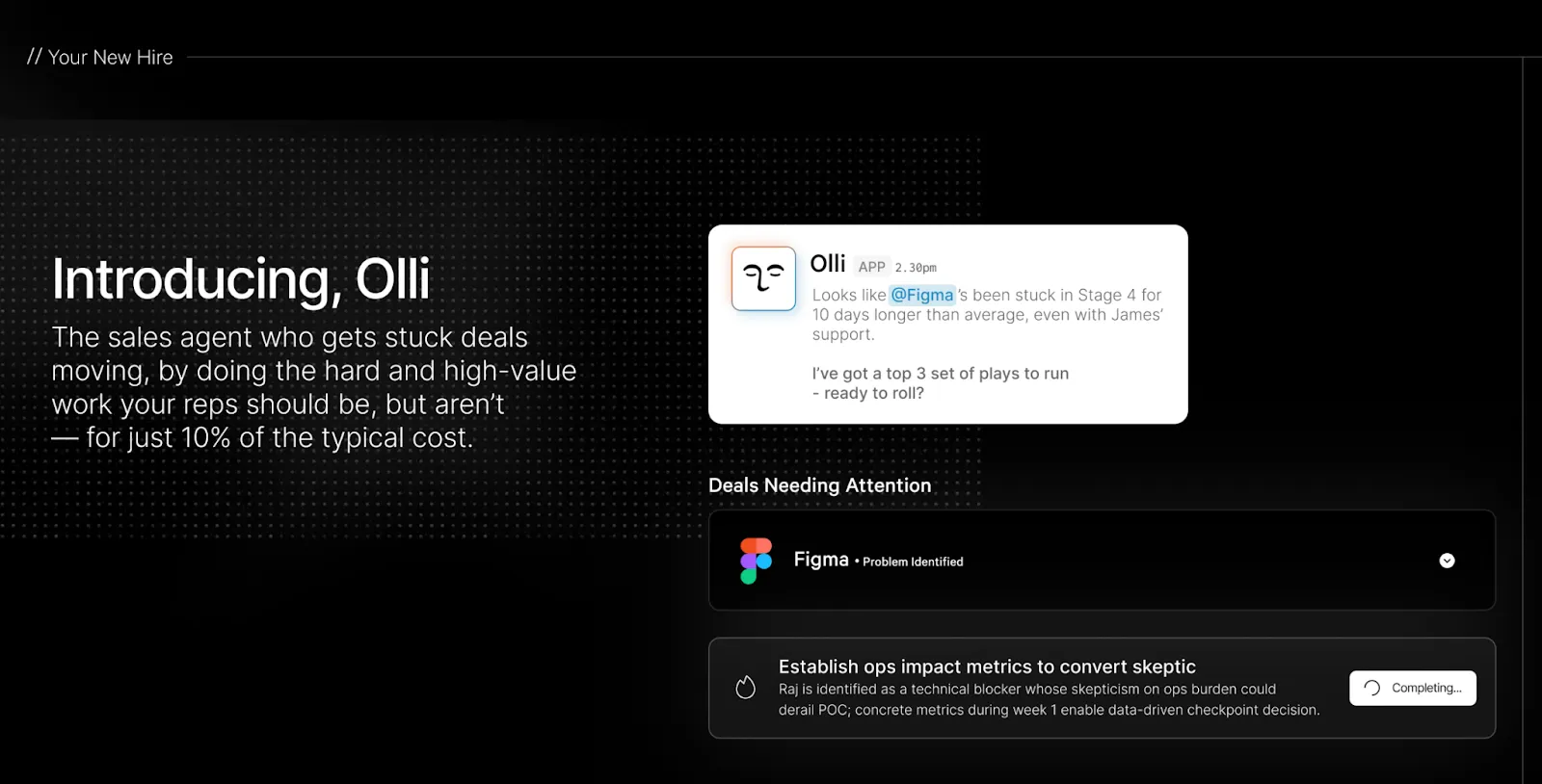
Hi, I’m Olli
And I’m not a static library, I’m a (nearly) living AI sales execution system.
Traditional enablement tools give your reps more to read, more to watch, and more to analyze.
I do the work. As Fluint’s AI sales agent, I build the business cases, draft the executive summaries, and create the deal narratives that get stuck opportunities moving.
I don't just suggest the next action; I help execute it.
Want to see how I can help? Let’s chat. Book a demo with the Fluint team →
FAQ's on:
AI workflows for sales enablement
Sales operations focuses on the infrastructure, processes, and tools that make the sales organization run—things like territory planning, compensation, and CRM administration. Sales enablement focuses on making the individual sellers more effective through content, coaching, and execution support. Ops builds the tracks; enablement ensures the train runs on time.
Early-stage teams need enablement, but not always a platform. The function—ensuring reps have what they need to win—is critical from day one. However, this can start with a shared drive and consistent coaching. A platform becomes necessary when informal processes break at scale, and you need to ensure consistent execution across a growing team.
Effective enablement helps reps close deals faster by removing friction and hesitation. Instead of searching for the right content, wondering what to do next, or struggling to articulate value, the rep is guided to the next best action. This compresses the time between sales stages, leading to shorter sales cycles and improved deal momentum.
The right implementation of AI reduces cognitive load, it doesn't add to it. Instead of presenting another dashboard of "insights," a well-designed AI orchestrates action. It works in the background to prioritize tasks, surface the exact asset needed for a specific meeting, or even draft the email to send. It's less of a tool to be managed and more of an assistant that simplifies the workflow.
Enablement supports engagement with complex buying committees by equipping reps to tailor their message to different personas. A modern platform can map content and messaging to specific buyer roles (e.g., CFO, IT Director, End User) and guide the rep on when and how to engage each stakeholder, ensuring a consistent and relevant narrative across the entire buying group.
Why stop now?
You’re on a roll. Keep reading related write-up’s:




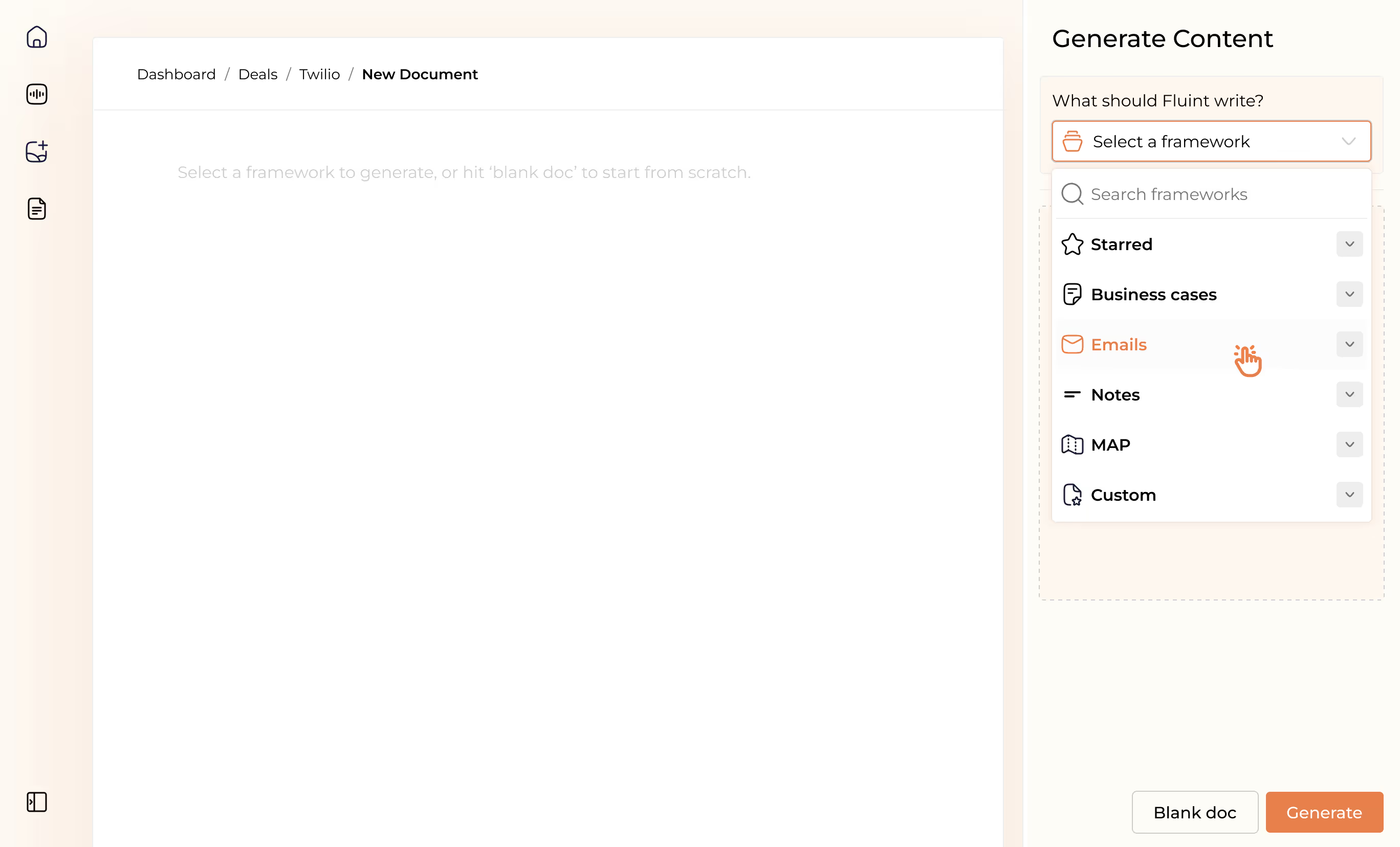
Draft with one click, go from DIY, to done-with-you AI
Get an executive-ready business case in seconds, built with your buyer's words and our AI.
Meet the sellers simplifying complex deals
Loved by top performers from 500+ companies with over $250M in closed-won revenue, across 19,900 deals managed with Fluint

Now getting more call transcripts into the tool so I can do more of that 1-click goodness.



The buying team literally skipped entire steps in the decision process after seeing our champion lay out the value for them.


Which is what Fluint lets me do: enable my champions, by making it easy for them to sell what matters to them and impacts their role.

