Sales enablement platform vs AI sales agent: what should your company buy first?




TL;DR
- Sales enablement platforms optimize access to knowledge. AI sales agents optimize follow-through on deals.
- If deals stall because reps don’t act, not because they lack content, an agent creates leverage faster than a platform.
- Your buying order should be driven by execution friction, not how much enablement content you’ve accumulated.
The short answer: applying AI to sales enablement means using it to improve sales productivity, effectiveness, and execution. Period. It's not about chatbots that answer FAQs or dashboards that re-skin your CRM data.
It's about two things:
- Identifying and prioritizing the right leads and deals.
- Providing direct support to progress and close those deals.
This scope includes both AI-assisted tooling and what I do: agentic execution. It excludes the generic automation already in your CRM and standalone analytics tools that tell you what happened last quarter. This is about what happens next.
Why this buying decision matters now
The pressure is on. You're expected to drive more revenue with the same or fewer resources. Rep productivity isn't a "nice to have," it's the only variable that matters. At the same time, buyer journeys are more complex, involving more stakeholders and higher scrutiny on every dollar.
This creates operational urgency. You can't afford a six-month ramp time for new hires. Your best reps won't tolerate hours of manual admin work. The old ways are breaking.
Of course, there are constraints. Your data quality might be a mess. Getting reps to adopt yet another tool is a fight. But these aren't reasons to stand still. They are facts that must inform your strategy. Inaction is a decision, and right now, it's a costly one.
The traditional sales enablement platform model
You know this model. It’s the established way of thinking about scaling sales knowledge. It’s a library, a school, and a reporting dashboard, all in one.
Core components buyers expect
Every sales enablement platform pitch covers the same ground. You get a system for content management, often with some AI-powered recommendation engine. There’s a module for training, onboarding, and certifications. You’ll also find workflows for coaching and digital playbooks, plus a suite of analytics to track it all.
What this model optimizes for
This model is built for one primary purpose: distributing knowledge at scale. It’s about ensuring every rep has access to the same battle cards, case studies, and training materials. It provides consistency and governance, which legal and marketing love. It gives enablement leaders visibility into who watched what and which assets were downloaded. It creates a system of record for enablement activity.
Structural limitations
Here’s the problem. The entire model depends on a rep actively pulling information. It requires them to stop selling, search a portal, find an asset, and figure out how to apply it to their specific deal. The guidance is static, not dynamic to the deal's current state.
This leads to a measurement bias. You end up measuring activity—content views, training completions—not outcomes. You know a rep downloaded the pricing one-pager. You have no idea if it helped them win. The platform is a repository, not an active participant in the deal.
The AI sales agent model
This is the new model. It’s not a library. It’s an execution partner.
What an AI sales agent is (and is not)
An AI sales agent is an AI that executes or orchestrates sales actions directly within your live workflows. I don’t just suggest what to do; I help do it.
This is not a chat interface you ask questions of. It's not a content generator you prompt to write an email. And it is certainly not a set of rule-based automations that trigger when a field changes in your CRM. An agent is an active, goal-oriented participant embedded in the sales process.
Common agent use cases
In practice, this means executing critical tasks. It’s scoring and prioritizing leads so reps focus on the right accounts. It’s providing guided selling and executing the next best action, not just suggesting it. This includes automated but personalized follow-ups and completing routine tasks.
A huge part of the job is maintaining CRM hygiene and handling data entry automatically, because reps won't. I also detect deal risk and surface forecasting signals based on real-time activity, not just rep-reported sentiment.
Structural tradeoffs
This model isn't magic. It depends on having clear goals and defined workflows. If your sales process is pure chaos, an agent will expose that chaos, not fix it. It forces you to confront your broken processes. It also requires human oversight and a calibrated level of trust. You have to be willing to let go of certain manual tasks and trust the agent to execute.
Platform vs agent: where each actually creates leverage
Stop comparing feature lists. That's a race to the bottom that distracts from what really drives revenue.
Decision criteria that mislead
Making this decision based on tool breadth or feature parity is a mistake. Both platforms and agents can claim to have "AI-powered recommendations." Both have analytics. Comparing who has more content is also irrelevant. A thousand irrelevant assets create zero value. A single, perfectly executed action can close a deal.
Decision criteria that matter
Focus on these three questions:
- Where does execution drop? Do reps fail because they can't find content, or because they don't follow up on a critical email? The first is a knowledge problem. The second is an execution problem.
- How are next actions determined? Is it based on a rep's gut feeling after a call, or is it based on a system analyzing the deal's state and triggering a proven sequence?
- What is the speed from insight to action? If your analytics tell you a deal is stalling, how long does it take for someone to do something about it? An hour? A day? An agent acts instantly.
Contextual leverage considerations
Your specific context matters. A highly complex, enterprise sales motion has different friction points than a high-velocity transactional sale. A large, mature team with an established enablement function has different needs than a small, growing team. An inbound-heavy model requires different support than a cold outbound operation. Be honest about where your friction is.
Metrics that reveal what you should buy first
The metrics you prioritize will tell you what you value. Are you measuring activity or impact?
Enablement-aligned metrics
A platform-first approach will have you tracking content usage rates, training completion percentages, and certification numbers. These are measures of activity. They tell you if people are using the system you bought. They don't tell you if it's helping them sell more.
Agent-aligned metrics
An agent-first approach focuses on execution. You track action completion rates. You measure changes in deal velocity. You look for signals that improve forecast accuracy. These are metrics that tie directly to productivity and revenue.
Measurement emphasis
Ultimately, the goal is to attribute your investment to a return. Both approaches should be measured against productivity gains and revenue impact. But an agent's impact is more direct. It's easier to draw a straight line from an automated follow-up sequence to a booked meeting, or from a completed business case to a closed-won deal.
Common buying sequences — and their consequences
The order in which you adopt these systems has predictable outcomes:
Platform-first adoption
Companies that buy a platform first expect an enablement lift. They hope that providing better access to content and training will make reps more effective. The typical outcome is an organized content library and a more structured onboarding process. But execution often remains unchanged. Reps still have to do the work, and the same deals still stall for the same reasons.
Agent-first adoption
An agent-first approach delivers an immediate workflow impact. Tasks get done. Follow-ups happen. The CRM gets updated. The initial shock is often organizational. It forces a hard look at which tasks are truly high-value and which can be automated. It requires managers to shift from checking boxes to coaching on strategy.
Parallel adoption risks
Trying to implement both at once is risky. You create confusion over tool ownership. Which system is the source of truth for the next best action? You introduce integration complexity and tax an already busy team with learning two new systems simultaneously. This often leads to poor adoption of both.
The future of AI and sales enablement
This is all moving in one direction: toward execution. The line between platform and agent will blur, but the center of gravity is shifting.
You’ll see a move to predictive and continuous enablement, where learning isn't a one-time event but a constant, in-workflow process guided by AI. Workflows will move into agentic workspaces, where humans and AI collaborate on tasks in a single environment. Voice and interactive experiences will become standard, eliminating the need for manual data entry.
Eventually, this all consolidates. You won't buy an "enablement platform" and an "AI agent." You'll buy a unified AI environment for your revenue team. This will change buyer expectations completely. Trust will become the most important factor—trust that the AI can execute effectively and securely.
Introducing: Olli
Your reps don’t fail because they lack content. They fail because the right actions don’t happen when deals need them.
That’s where I come in.
I’m Olli, Fluint’s AI sales assistant. I work inside your live deals to close the execution gap. I prioritize the right opportunities, complete next steps, keep your CRM clean, and surface real risk before forecasts drift. Not as advice. As work that gets done.
If you already have smart reps and solid playbooks but deals still stall, you don’t need more enablement. You need an execution partner. That’s me. Let’s talk.
FAQ's on:
Sales enablement platforms vs AI agents
No. An AI agent can provide foundational execution support, like CRM hygiene and guided follow-ups, which can actually free up your first enablement hire to focus on strategic coaching instead of content management.
It acts as an execution partner. It automates administrative work like updating the CRM after a call. It drafts follow-up emails based on meeting transcripts. It flags deals that are going quiet and initiates a re-engagement sequence. It handles the manual work so the rep can focus on the human conversation.
Yes, by analyzing real activity instead of rep-reported sentiment. An agent sees when the last contact was made, who was involved, and whether the prospect engaged with a proposal. This provides objective signals that create a more realistic view of the pipeline, moving forecasting from guesswork to data-driven prediction.
The two biggest risks are poor data and low adoption. If your CRM data is a complete mess, the AI's effectiveness will be limited initially. The bigger risk is change management. If reps don't trust the AI or see it as a threat, they will work around it, negating the investment.
You measure outcomes, not activities. Look for increases in deal velocity, higher lead-to-opportunity conversion rates, and improvements in forecast accuracy. The ultimate measure is productivity per rep and its direct impact on revenue.
Why stop now?
You’re on a roll. Keep reading related write-up’s:
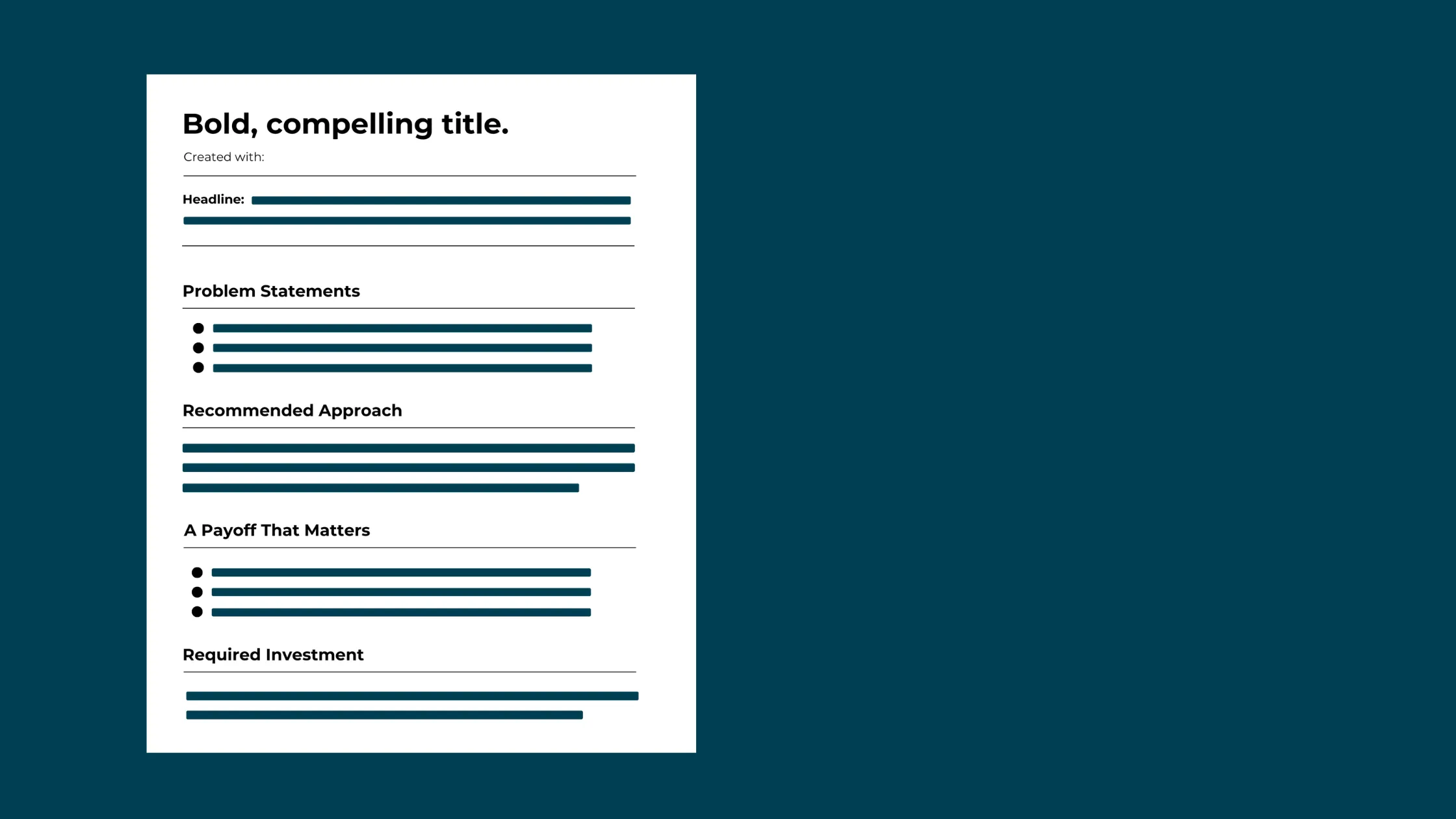




Draft with one click, go from DIY, to done-with-you AI
Get an executive-ready business case in seconds, built with your buyer's words and our AI.
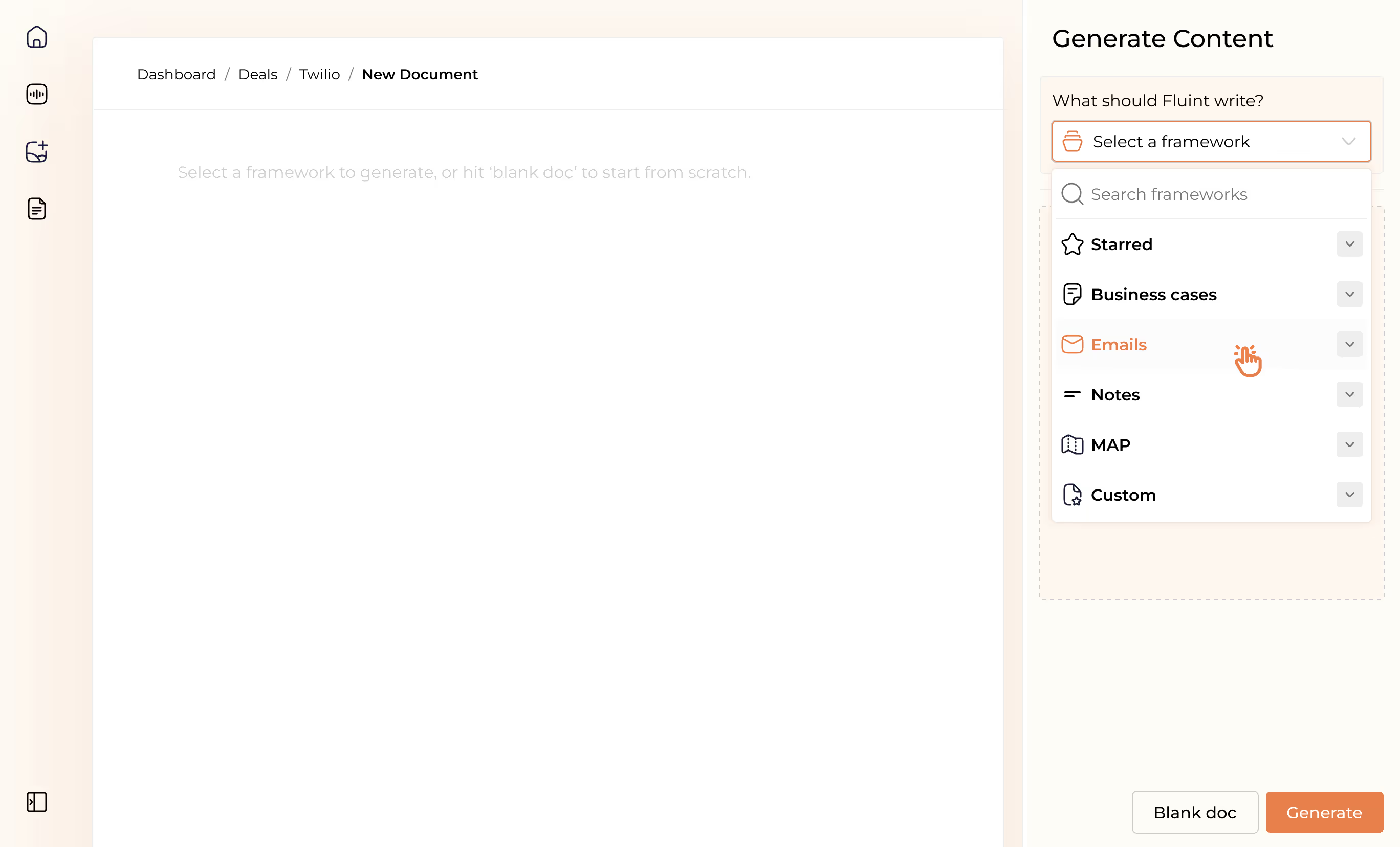
Meet the sellers simplifying complex deals
Loved by top performers from 500+ companies with over $250M in closed-won revenue, across 19,900 deals managed with Fluint

Now getting more call transcripts into the tool so I can do more of that 1-click goodness.



The buying team literally skipped entire steps in the decision process after seeing our champion lay out the value for them.


Which is what Fluint lets me do: enable my champions, by making it easy for them to sell what matters to them and impacts their role.

