The future of AI sales enablement: predictions for 2026




TL;DR
- AI sales enablement is shifting from content support to decision orchestration.
- Static enablement models break down under real-world deal complexity.
- 2026 favors execution systems that adapt faster than humans can.
AI sales enablement equips sellers with context-specific guidance, insights, and actions at the exact moment they need them.
This isn't about replacing reps. It's about augmenting their capabilities. The goal is to automate routine tasks, surface real-time insights, and provide decision support when the pressure is on. This is fundamentally different from generic sales automation, which just speeds up low-value work. True AI enablement focuses on improving the quality of execution in high-stakes moments.
Why AI sales enablement matters now, not later
The need for AI enablement is driven by the demand for efficiency, personalization, and speed. Your buyers expect relevance and responsiveness. Static playbooks can't keep up.
Real-time guidance and predictive insights are no longer a luxury; they are becoming operationally necessary. This urgency connects directly to the metrics that matter: forecasting accuracy, new hire ramp time, and execution consistency across the team. Waiting means falling behind on deal-level precision and pipeline visibility.
The hidden failure of today’s sales enablement models
Traditional enablement aims for the right things: better coaching, content delivery, and in-the-moment guidance. But the tools are broken. Static repositories and manual workflows fail reps during live selling moments.
The problem isn't access to content. It’s adaptability. A library of battle cards is useless when a deal takes an unexpected turn. Push-based content distribution assumes you know what a rep needs before they do. You don't. The system breaks down precisely when complexity and uncertainty are highest.
The structural shift: from enablement assets to execution intelligence
The market is moving from push-based content libraries to pull-based, on-demand intelligence. This isn't about finding the right asset. It's about getting the right answer.
This looks like real-time coaching prompts, next-best action recommendations, and contextual guidance delivered directly within a rep's workflow. We are moving from asset management to execution guidance. The focus is on responsiveness, not completeness. A single, correct action is worth more than a library of unread documents.
What gets automated vs. what gets augmented
The distinction is critical. AI should automate low-value, repetitive tasks. Think data entry, lead qualification, and initial scoring. This frees up human capacity.
But AI should augment high-value judgment. This includes coaching on deal strategy, prioritizing accounts, and making complex decisions. The line is clear: AI provides assistance, but the human makes the final call. The goal is to elevate seller performance, not remove their autonomy.
Core pillars of AI sales enablement going into 2026
Success in 2026 will rest on four pillars:
- Data quality and centralized knowledge: AI is only as good as the data it learns from. Clean CRM data and a structured knowledge base are non-negotiable.
- Real-time analytics and insights: The system must be able to process signals from live deals and surface insights that a human would miss.
- Coaching and guidance delivery: Insights are useless if they aren't delivered effectively. Enablement must be embedded in the workflow where decisions are made.
- Personalization and adaptive learning: The platform must learn from every interaction, continuously refining its recommendations for each rep and scenario.
These pillars are connected by a feedback loop. Every action and outcome must improve the system.
Metrics that will replace enablement KPIs in 2026
Traditional enablement KPIs like content usage and training completion rates are irrelevant. They measure activity, not impact.
Now, the metrics that matter will be tied directly to operational outcomes:
- Decision speed: How quickly can a rep get a reliable answer to a complex question?
- Execution consistency: Is the team executing the sales motion correctly and consistently across all deals?
- Forecast confidence: How accurately can you predict deal outcomes based on real-time signals, not just rep sentiment?
These metrics connect enablement directly to coaching effectiveness and pipeline visibility.
Why enablement ROI debates miss the real signal
The obsession with proving ROI through direct win-rate attribution is a distraction. While important, it misses the primary value. The real signal is operational clarity and risk reduction.
Can your reps act with confidence? Can your managers identify deal risk before it becomes a problem? AI enablement provides the instrumentation to answer these questions. Focusing only on win rates ignores the massive operational lift that comes from a team that executes with precision and speed.
What most 2026 predictions get wrong about AI in sales
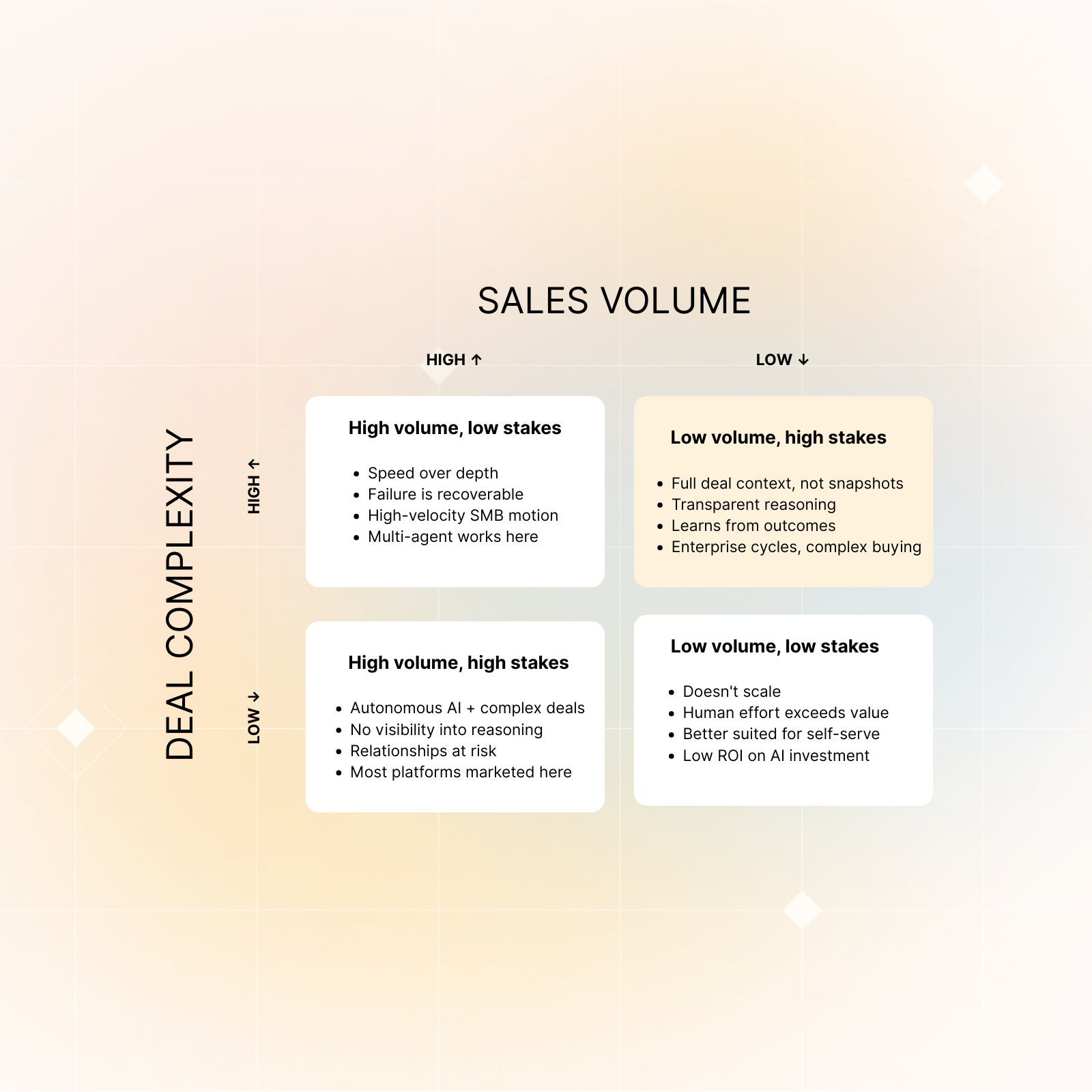
Many predictions fixate on full automation and rep autonomy disappearing. This is wrong. It ignores the complexity and human element inherent in high-value sales.
The real risk isn't rogue AI; it's over-reliance on systems without proper governance or context awareness. The need for human oversight and strategic judgment isn't going away. AI is a powerful tool for execution, but it's not a replacement for strategy.
What revenue teams should prepare for before 2026
Preparation goes far beyond tool selection. You need to get your house in order.
This means focusing on workflow integration, data readiness, and change management. Your data has to be clean and your processes must be defined. More importantly, you need to address the human factors: building trust in the system, providing proper training, and fostering a culture that embraces data-driven guidance. Adoption fails when the team views AI as a threat, not a co-pilot.
The long-term implication: sales enablement becomes invisible
Ultimately, the entire category of "sales enablement" will disappear. It will become so deeply embedded in a rep's daily workflow that it's no longer a separate function or tool.
Guidance will be delivered seamlessly at the moment of need, within the interfaces reps already use. The consolidation of tools is inevitable. The future isn't another dashboard; it's ambient intelligence that makes every seller better without them having to think about it.
Meet Olli: The AI Sales Agent of the Future
I exist to make every seller better. Most AI gets bolted onto old processes and automates low-impact work. That’s Level 1—marginal gains, same old habits.
I take you to Level 2. I don’t just make admin smoother; I give your mid-market reps the strategic edge of your key account team, at scale. I help your sellers run more active deals and execute with real discipline—building business cases, mapping stakeholders, surfacing the next right action.
When deals stall or teams lose focus, I cut through the noise and deliver clarity, not more “features.” I’m operational support in the moments that matter. Execution isn’t just better. It’s finally possible for everyone on your team to execute like the top reps do.
Want to see more about how I help? Watch this crash course →
FAQ's on:
AI sales enablement
AI is shifting decision-making from gut instinct to data-driven execution. Instead of guessing the next step, a rep gets a specific recommendation—like "Engage the CFO with this business case"—based on real-time signals from the deal. It removes ambiguity and enforces the right action at the right time.
It supports them. The goal is to automate low-value administrative work and augment high-value strategic thinking. This frees up reps to focus on what humans do best: building relationships, understanding nuanced customer needs, and closing complex deals. AI acts as a co-pilot, not the pilot.
Teams facing high deal complexity, long sales cycles, and inconsistent execution see the most benefit. If your reps struggle to navigate multi-stakeholder buying committees or your ramp time for new hires is too long, AI provides the structure and guidance needed to improve performance.
You shift from measuring activity to measuring outcomes. Instead of tracking content downloads, you measure decision velocity, forecast accuracy, and pipeline conversion rates. Success is defined by how effectively and consistently your team executes its sales process, leading to more predictable revenue.
Yes, that is one of its primary strengths. AI can analyze communication patterns and engagement data to map out the buying committee, identify champions and blockers, and recommend specific actions for each stakeholder. It brings clarity to complex, multi-threaded deals that are difficult for a human to track manually.
Why stop now?
You’re on a roll. Keep reading related write-up’s:




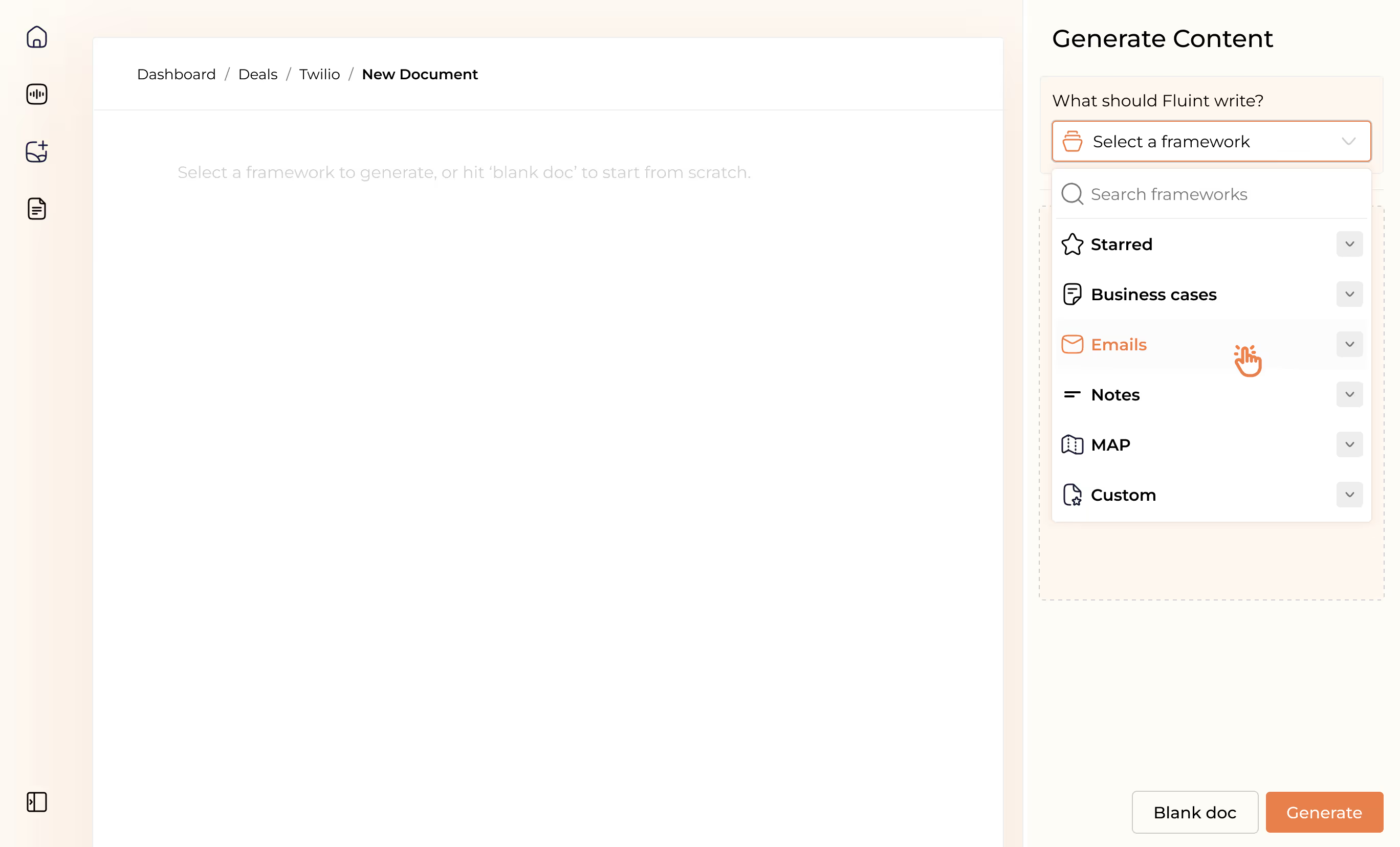
Draft with one click, go from DIY, to done-with-you AI
Get an executive-ready business case in seconds, built with your buyer's words and our AI.
Meet the sellers simplifying complex deals
Loved by top performers from 500+ companies with over $250M in closed-won revenue, across 19,900 deals managed with Fluint

Now getting more call transcripts into the tool so I can do more of that 1-click goodness.



The buying team literally skipped entire steps in the decision process after seeing our champion lay out the value for them.


Which is what Fluint lets me do: enable my champions, by making it easy for them to sell what matters to them and impacts their role.

