


How Mitch closes complex GRC deals faster with Olli

"If you're spending 15, 20, 30 minutes before every call just trying to remember what matters—Olli fixes that. You'll walk into every call more confident, and you'll stop missing the gaps that stall deals."

Mitch K., VP, Enterprise Sales

Background

Mitchell Kasprzyk is VP of Enterprise Sales at Compyl—an individual contributor title he wears with pride. He's a business-case-first seller who won't let a deal advance without knowing the ROI argument cold, and a self-described chatty guy who'd rather debate Olli on a call strategy than accept the first draft.

Company

Compyl sells a unified GRC (governance, risk, and compliance) platform to mid-market and enterprise companies—typically 500 to 10,000 employees. Their buyers are CISOs, CIOs, and compliance directors drowning in spreadsheets, competing internal priorities, and manual processes. Getting a "yes" means navigating executive scrutiny at every stage.

The Deal

Mitch had a deal moving fast toward a technical win—good rapport, solid POC, a buyer who seemed engaged. Olli flagged what he'd started to miss: no executive sponsor confirmed, no hard deadline, and a business case that would never survive the CFO. Instead of stalling at the finish line, Mitch went back and multi-threaded. The deal kept moving.

What would you say to someone who is considering selling with Fluint?

"If you're using Olli, you're basically getting an elite sales leader at your disposal at all times. Not everyone is blessed with really good sales leadership that knows how to help you advance deals. Olli fills that gap."

Mitchell Kasprzyk has spent his career moving upmarket—from transactional SaaS into the kind of complex enterprise deals where a single call can make or break a six-figure opportunity. At Compyl, he sells unified GRC software to CISOs and compliance directors who are buried in manual work and fighting for internal budget. Winning those deals means building an airtight case, not just a great demo.

Before Olli: Building from Scratch, Every Time

Mitch has always been a prep-forward seller. Before Fluint, that meant manually rereading transcripts before calls, piecing together context, and drafting business cases from old templates. Follow-up emails were slow—'a dad with two little kids' slow, in his words, with his wife vouching for it. The bigger issue wasn't just time. It was friction. When building a business case requires starting from scratch every time, sellers find reasons to skip it or shortcut it. For Mitch, that friction was quietly costing him deal quality.

Then he started working with Olli.

What Changed: A Business Case in Five Minutes

The first thing that clicked for Mitch was the follow-up quality. Most AI-generated recaps are interchangeable—a list of what was discussed and when the next call is. What Fluint produced was different: follow-ups that pulled out the most insight from the call, framed why it mattered, and quietly started building the internal business case from email one. That signal told Mitch everything about the rest of the platform. Now, business cases that used to take hours to assemble from scratch come together in minutes—using the customer's actual words, data, and priorities. Mitch still edits and debates the output. That's intentional.

The Methodology: Debate Olli, Don't Just Accept Him

Mitch is a self-described disagreeable guy, and he treats Olli the same way he'd treat a strong sales director: he pushes back. He asks why, challenges assumptions, and walks through scenarios. Flow Mode starts his day with prep across every active call. After each conversation, he's logging next steps and asking Olli what he missed—including whether the executive sponsor is real, whether the deadline is confirmed, and whether the business case is tight enough to be forwarded internally. He's even asked Olli to rate his performance on a transcript. The output is direct. That's why he trusts it.

Where Human Judgment Still Wins

Mitch is clear that Olli doesn't replace the seller—he makes the seller sharper. The AI can surface a risk or suggest a next step, but it's the rep who decides whether that suggestion fits the buyer, the moment, and the relationship. Not every idea Olli generates is the right one. The reps who get the most out of Fluint are the ones who use their own judgment to say: what would happen if we added this? How will the executive team receive this? That layer of human reasoning on top of Olli's output is what Mitch believes separates good deals from closed ones.

His advice for other reps: "You'll walk into every call more confident, and you'll stop missing the gaps that stall deals. It's like having a co-pilot that actually has your back."

Using Fluint Q&A

We sat down with Mitch to dig into how Olli fits into his enterprise sales motion.

What's your role at Compyl, and what does a typical week look like?

I'm VP of Enterprise Sales—which is an IC role, so I'm in the trenches as an enterprise AE. I'm selling a unified GRC platform to mid-market and enterprise companies: CISOs, CIOs, compliance directors who are drowning in manual work. Most of my week is discovery calls, POC scoping with teams that have competing priorities, and building business cases that connect the GRC investment to real revenue protection and risk reduction.

What was your workflow like before Fluint?

Messier. More ad hoc. I've always been a big prep person—reading back through transcripts, piecing together notes from the last call. But follow-up emails? I'm a dad with two little kids. My wife will tell you those were taking way too long given the quality. And business cases were built from scratch every time, forced into old templates. When there's a lot of friction in a process, you end up doing that part of the process less. I noticed that in myself.

What was the moment Fluint clicked for you?

Honestly, it was the follow-up emails. Most AI-generated follow-ups feel like: 'Hey, thanks for connecting, here's what I heard in 1-2-3, see you Tuesday.' Great. But what Nate and the team built is actually pulling out the most insightful part of the call—why that insight matters, and how it helps the customer sell internally. It's subliminally building the case from email one. That level of quality in one part of the tool told me everything about the rest of it.

How do you use Olli day-to-day? Walk us through it.

I start with Flow Mode—seeing all my calls, getting quick prep suggestions, things to do to be ready and to go above and beyond. After every call, I'm logging next steps, asking Olli what I missed. I've even asked him to rate my performance on a transcript and tell me where I rank compared to other reps. He's pretty direct. That directness is actually why I keep trusting the output more.

You mentioned you debate Olli. What does that look like?

I'm a disagreeable guy, so I'll push back. I'll say: prove it to me, why does this matter, what happens if we do it differently? You can get really high-quality suggestions from AI that might be right, might be wrong—you still have to use your own judgment. So I'm back and forth with Olli on deal strategy, not just asking him to edit emails. He's more like a co-pilot, a sales director, a colleague. Not a tool I check in with once a week.

Is there a deal where Olli caught something you would have missed?

Yeah. I had a deal moving toward a tech win and I was deep in the technical fit. Good POC, good rapport. Olli surfaced that I didn't have a confirmed executive sponsor or a hard deadline—and that the business case wasn't tight enough to survive executive review. Without that nudge, that deal would have stalled with a great POC and nothing else. Every seller has been number two at the end. That's the worst position. Olli is the safeguard against it.

How would you pitch Fluint to another rep in 60 seconds?

If you're spending 15, 20, 30 minutes before every call trying to piece together context—Ali fixes that. If your follow-ups feel generic because you don't have time to make them sharp—Ali fixes that. If you're building business cases from scratch and your champion isn't forwarding them to their executive team—Ali fixes that. You'll walk into every call more confident, stop missing the gaps that stall deals, and have a co-pilot that actually has your back. Give it a try.

Treat every account like a key account, with Fluint

Put Fluint to work in a deal you're currently working on, and if you’re not happy with the platform for any reason in your first 30 days — we’ll refund you.

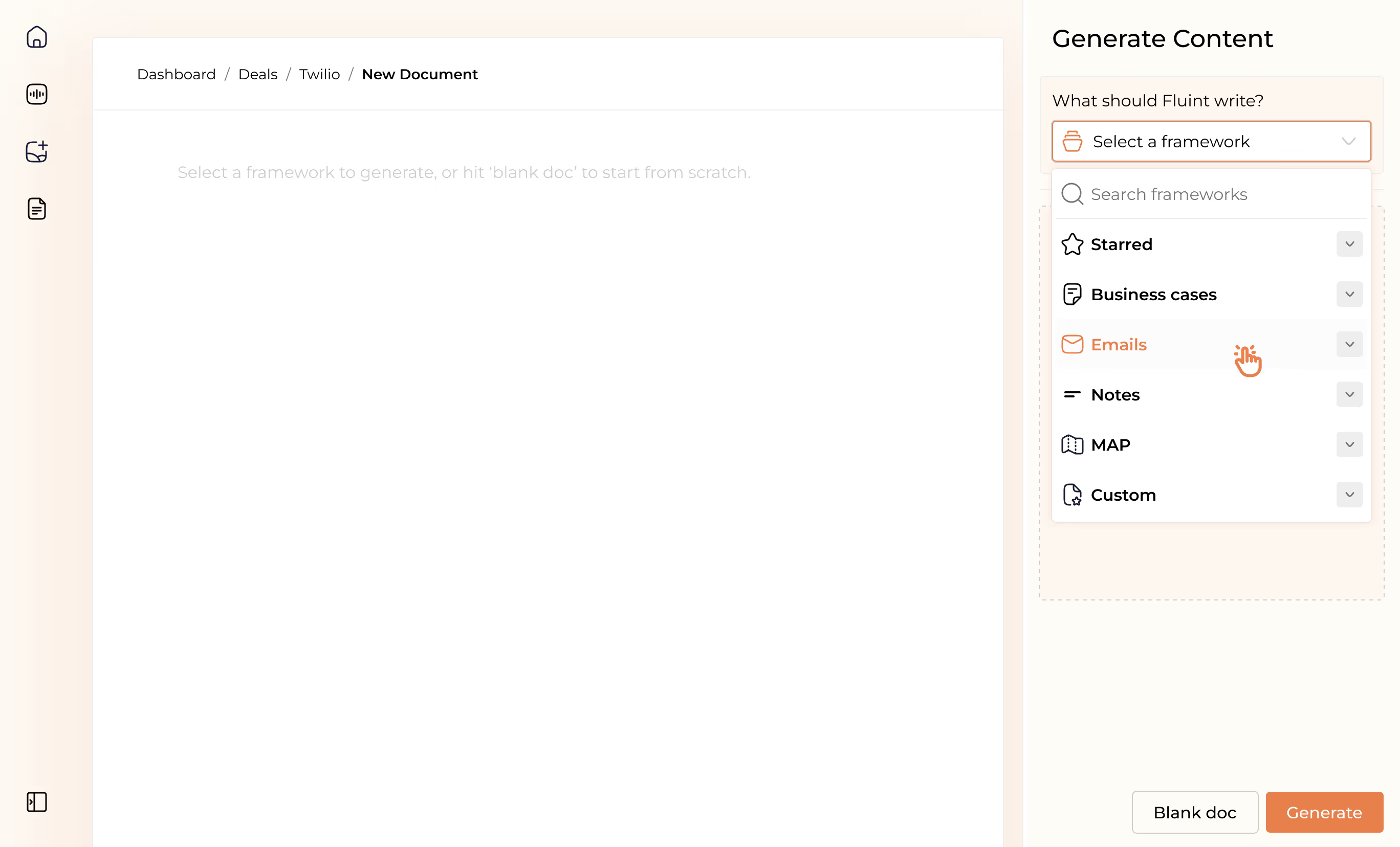
A UI sidebar for "Generate Content" allowing a user to select a framework, categorized by "Starred," "Business cases," "Emails," "Notes," "MAP," and "Custom," with an option to start a "Blank doc."

More case studies

Fluint users winning with more calm, less chaos: